
Batch - Processing audio faster than realtime
@oid Pretty sure the multiple connect messages were on purpose by @oid.
It was a joke thread from beginning to end.
OH>>>> last post was from @oid....... I thought it was Spacechild1....... now I am very confused.
David.
 posted in technical issues
Shared references to stateful objects?
@ddw_music I think you are constructing a problem where there is none.
Functions are from the functional programming paradigm, abstractions are the equivalent in the data flow paradigm.
You can even simulate function-like behavior in data flow, as shown above. The method @jancsika mentioned with sending $0 is basically the same @jameslo posted as the third example in his first response.
Although it is possible to simulate function-like behavior in data flow like this, this is very clunky and complicated.
Fortunately it is completely unnecessary.
You can simply use abstractions within the data flow. If you like them to share a state, this is possible not only using a central storage in the main patch, but also by using [value] within the abstractions themselves.
Yes, [text sequence] cannot do this. You would have to replicate the behavior of [text sequence] with simply [text] by storing the current state somewhere else.
Take a look here: shared_state.zip
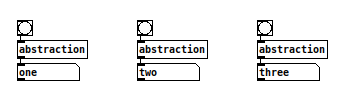
In this example, i had to put in the content into each [text] individually. This can be automated by loading the text from a file. 
I think it is called a paradigm because it takes another perspective to solve the same problem in a different way. 
 posted in technical issues
Smooth frequency transition
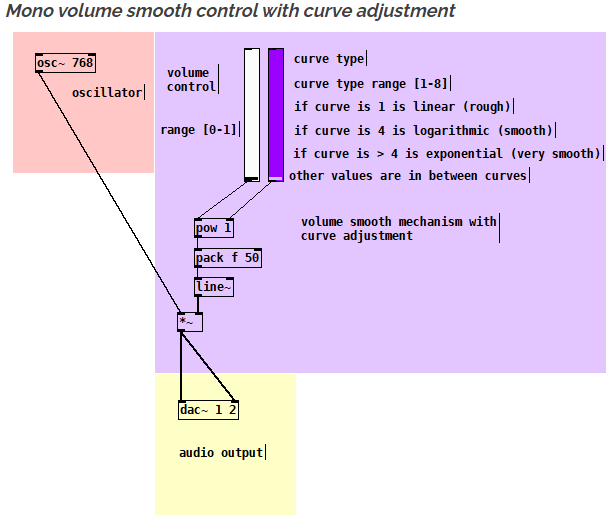
you should use a logarithmic line~ object to adjust the curve as smooth as you want.
On top of that you should apply a Nyquist correction to the output of your oscillator abstraction.
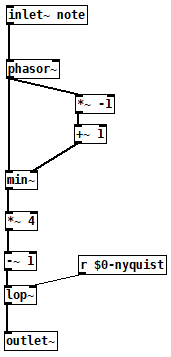
So here you have some imagines how to do that. The Nyquist abstraction is used in the output of the triangle oscillator abstraction as an example. Then the final output can be controlled with a logarithmic line~ object.
OBS : If you need more then one oscillator you can apply this for each oscillator and then use a mixer and then the output of the mixer you use again the same idea. In this way you have an oscillator smooth stage control and a final mixer stage control for extra smoothness.
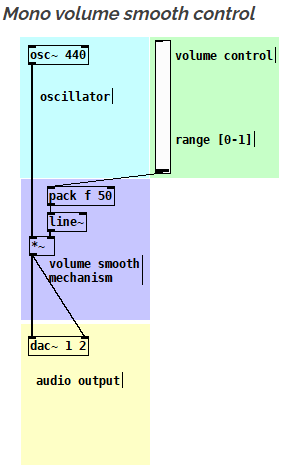
This is just the simple mono smooth control (no curve adjustment)
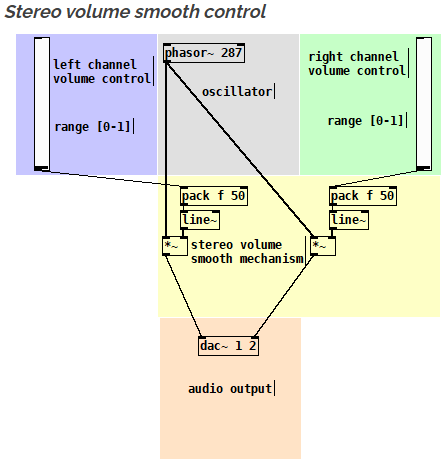
The same idea but as a stereo version
Here is with logarithmic smooth control (with curve adjustment)
Here you have a Nyquist correction abstraction
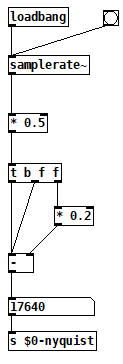
Here you have a triangle oscillator with Nyquist correction
You can also download xline~ which is an object that is doing just that :
https://forum.pdpatchrepo.info/topic/13084/xline-logarithmic-line-object
 posted in technical issues
Smooth frequency transition
@deframmentazione-geometrica +1 RE line, line~ as per @Jona & @whale-av, but if you're controlling the frequency of an oscillator or phasor with an audio signal, you can also just low pass filter the controlling signal to smooth out the transition.
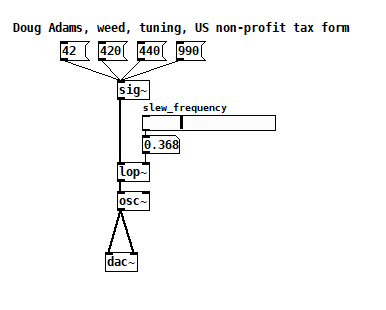 portamento.pd
Edit: after reading @solipp's comment below, you may envision me slogging through every patch I've ever written to see how I've been burned by that problem
 posted in technical issues
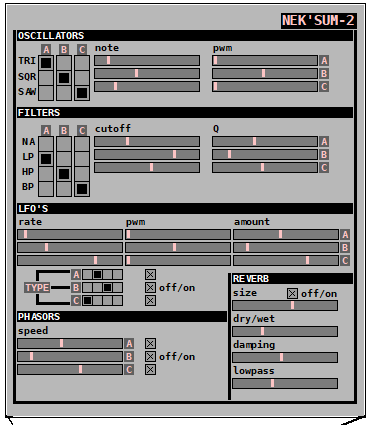
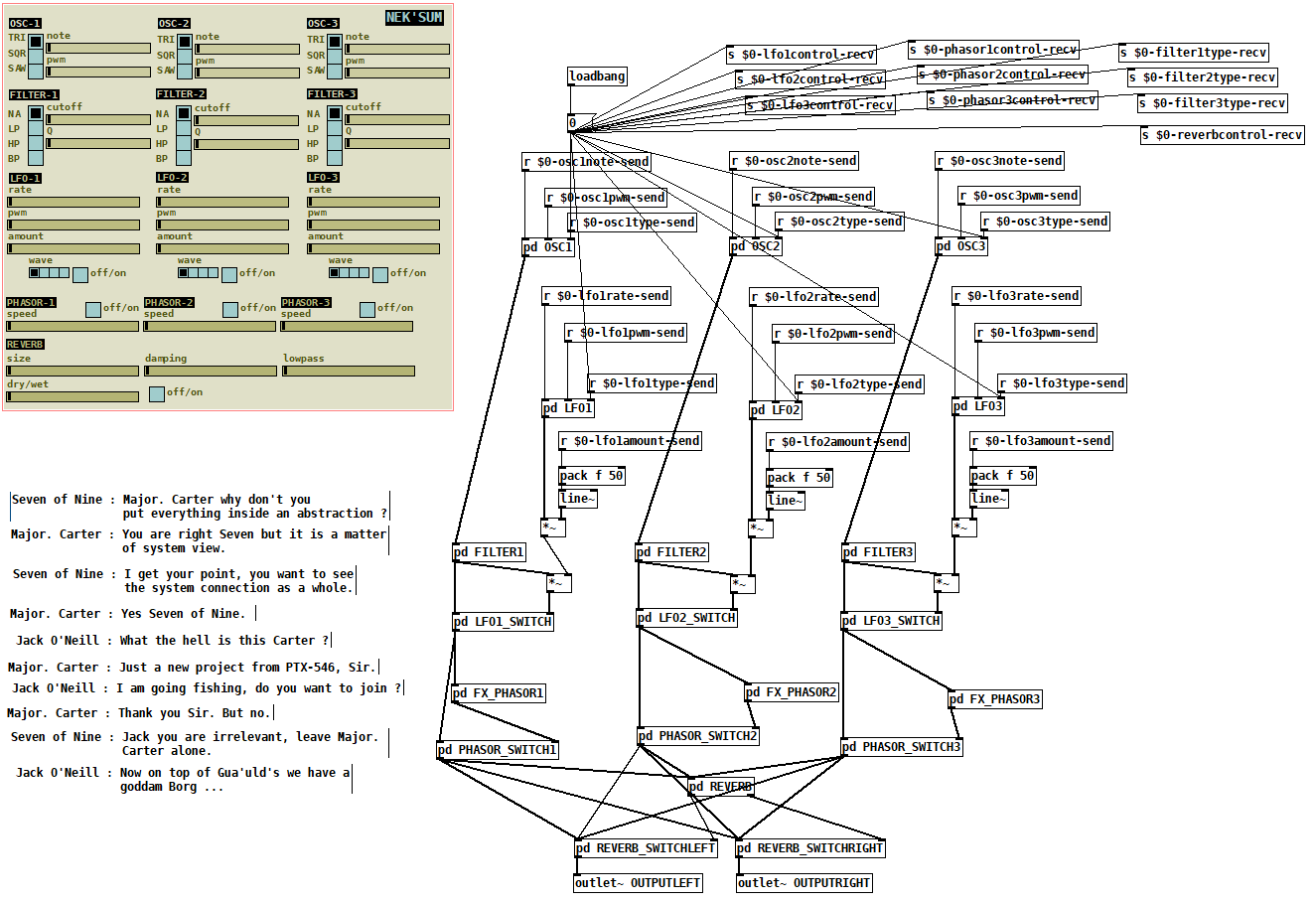
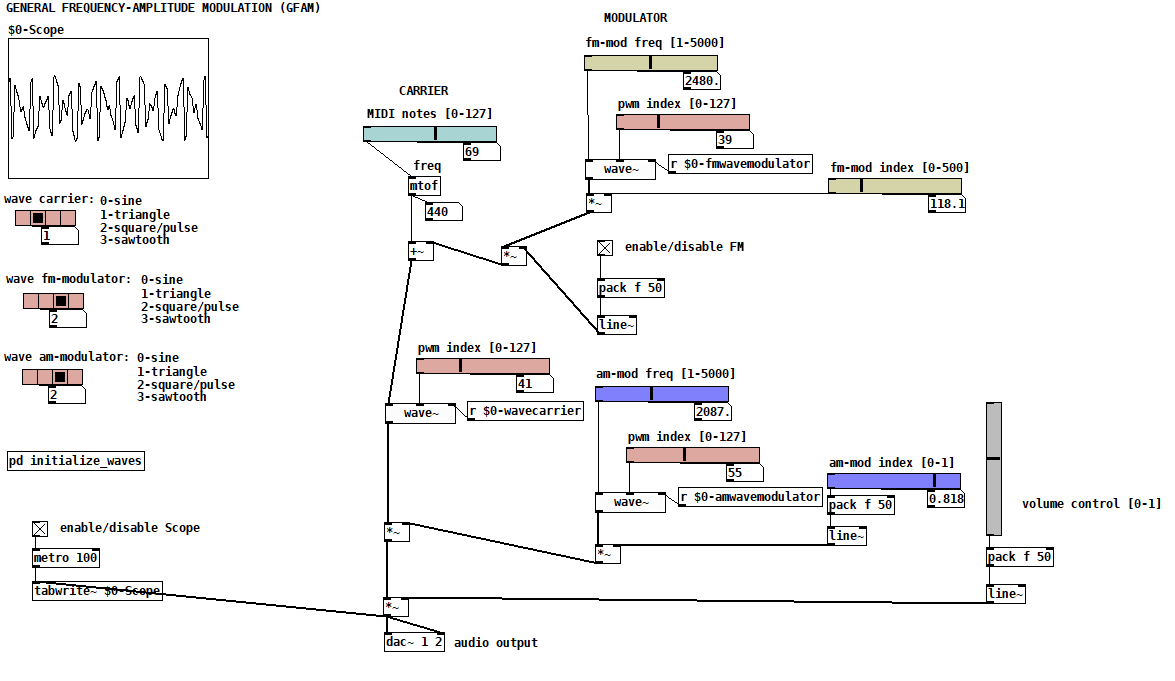
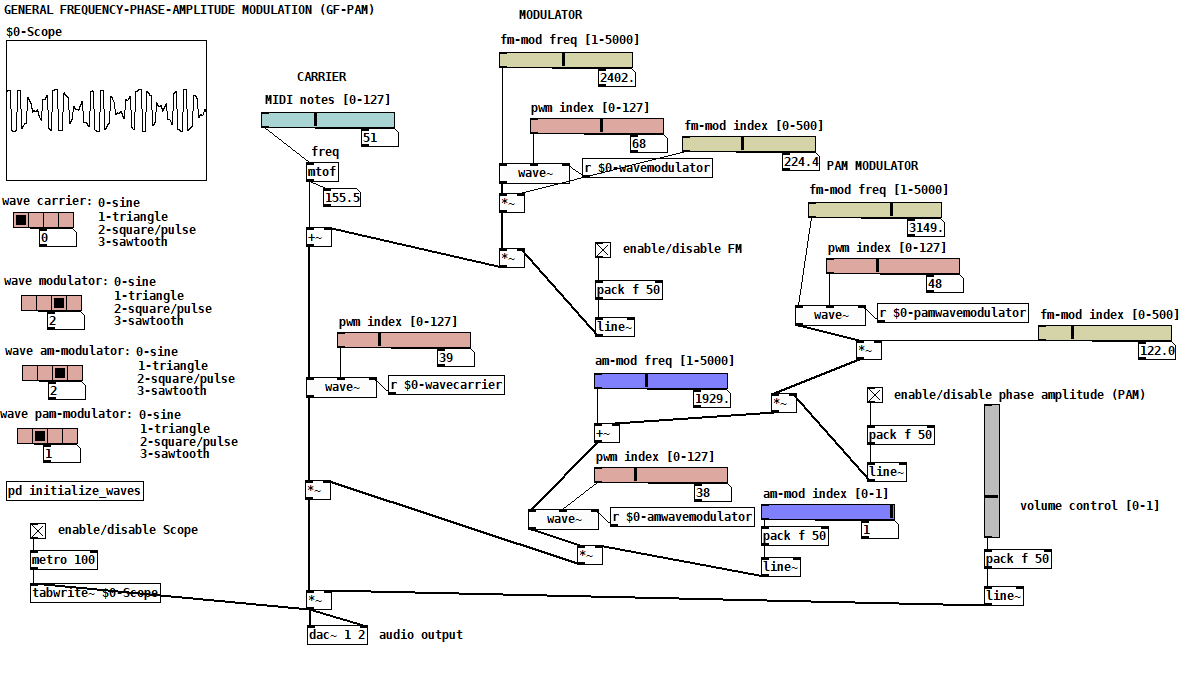
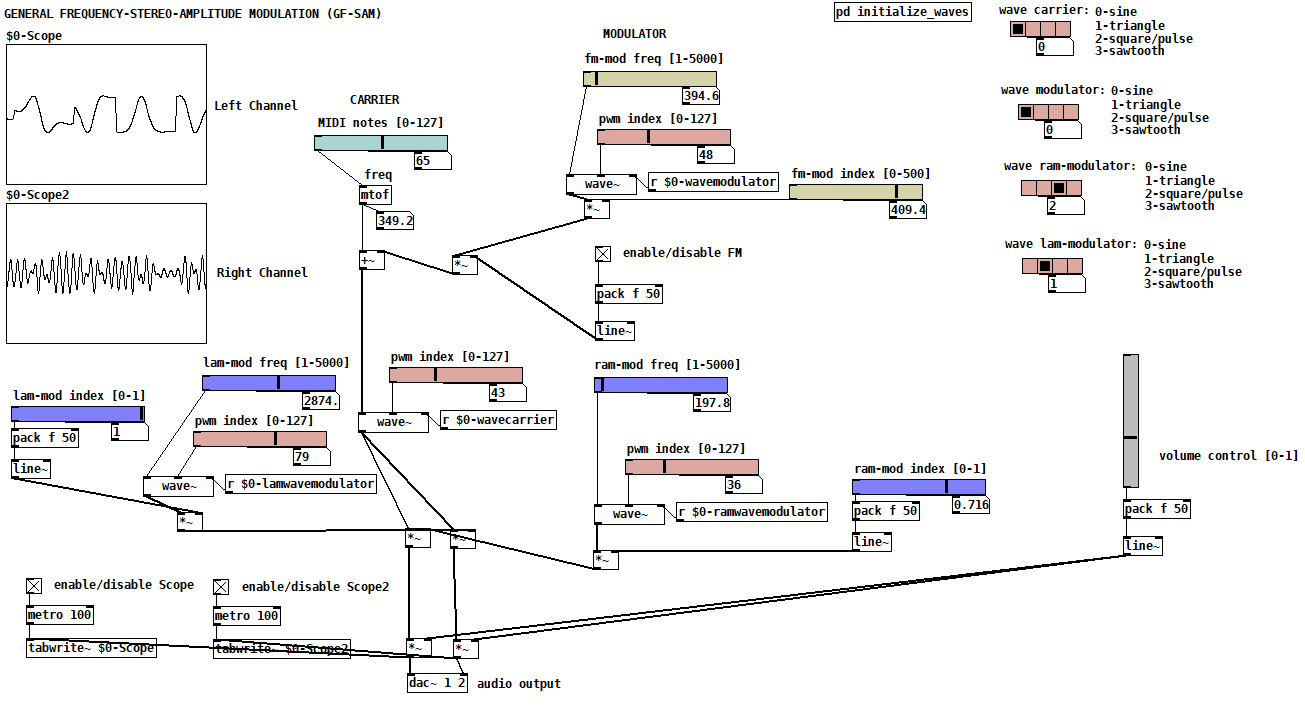
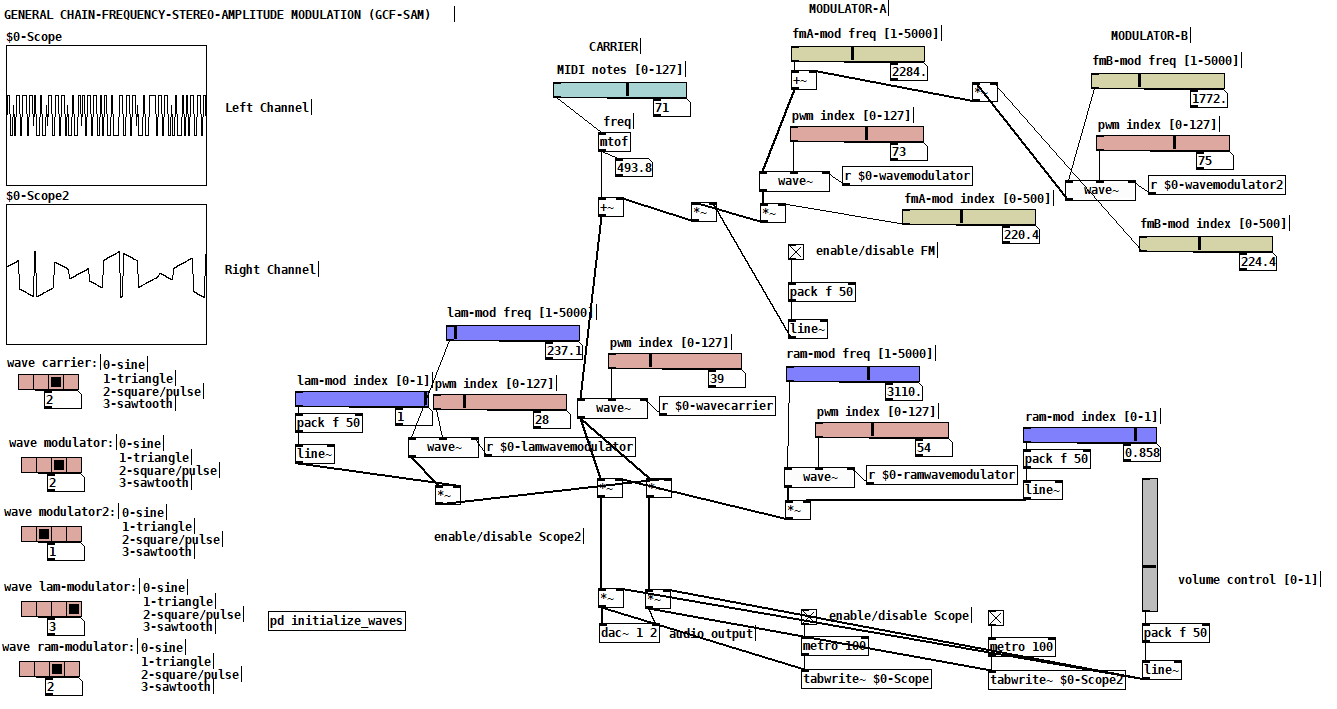
Nek'Sum - An advanced drone/texture monophonic synthesizer <- [v6.0] + // Mandarin Edition //
Nek'Sum-6 drone/texture monophonic synthesizer is compose of 5 stages :
First stage -> 3 main OSC with noise mixer option and generative synthesis support with 5 types of waves (tri,sqr,saw,supersaw,generative).
Second stage -> Filter stage with morph option and 4 filters types : Pass through, Lowpass, Highpass, Bandpass for the first stage.
Third stage -> 3 LFO (sin,tri,sqr,saw) modulators for the second stage.
Forth stage -> 3 Phasor's for the third stage.
Fifth stage -> 1 Deep Reverb with Lowpass filter for the forth stage.
It is capable of generating a large soundscape of drone/texture sounds inspired by The Doctor.
-UPDATE-
Thanks to Seven of Nine Nek'Sum is now at version [v6.0]
- Added Mandarin edition after cyber-brainstorming with Jade Chia-Jung [v6.0].
- Translation of the Ancient Egyption logo into obscure dialect of Anquietas language, thanks to Daniel Jackson [v6.0].
- Thanks to Nox cyberart society now the GUI is much better [v5.0].
- Added reset, randomization and resize for the generative synthesis [v5.0].
- Added generative synthesis support for each oscillator [v4.0].
- Added a noise mixer with 4 types of noise for each oscillator (orange,yellow,blue,pink) [v3.0].
- Added a morphing mechanism for filter stage [v3.0].
- This new version has a better GUI interface powered by a Borg-Casimir engine [v2.0].
-CYBERLOG-
Project manager : Oma Desala
Programming/UX design : Boran Robert Andrei
QA engineer : Anubis
Generative synthesis system design/Lead engineer : Seven of Nine
DSP engineering : Jade Chia-Jung, The Doctor
Testing/debugging system engineer : Lt. Colonel Samantha Carter
Language consultant : Daniel Jackson
Patch Download English Edition :
Nek'Sum 6.rar
Nek'Sum 5.rar
Nek'Sum 4.rar
Nek'Sum 3.rar
Nek'Sum2.rar
Nek'Sum.zip
Patch Download Mandarin Edition :
Nek'Sum 6 - Mandarin Edition.rar
Mandarin special edition :
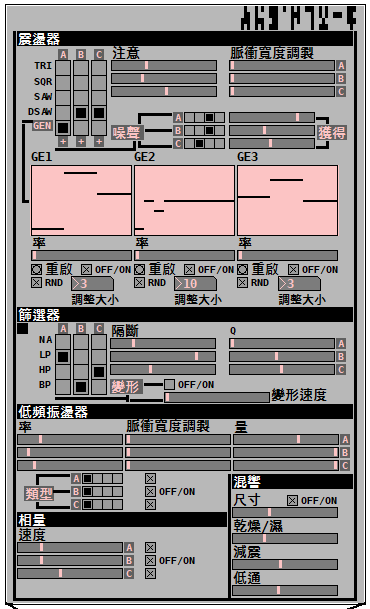
Snapshots :
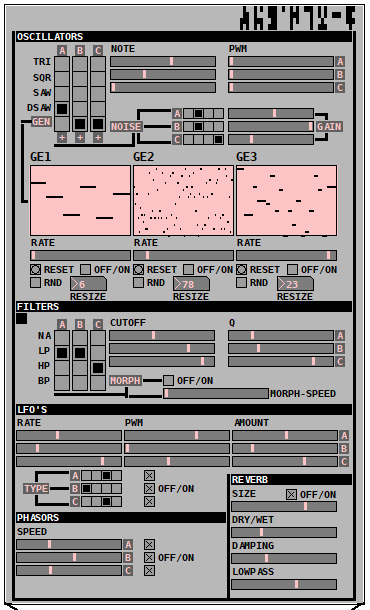
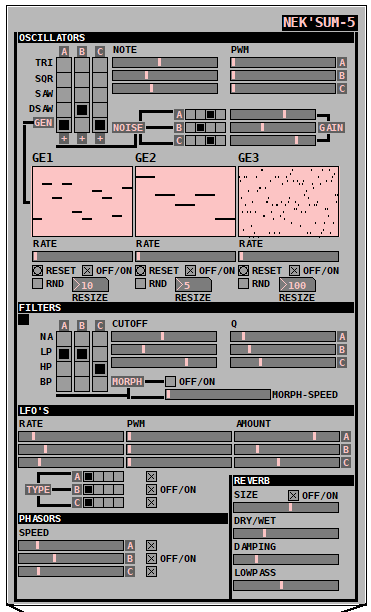
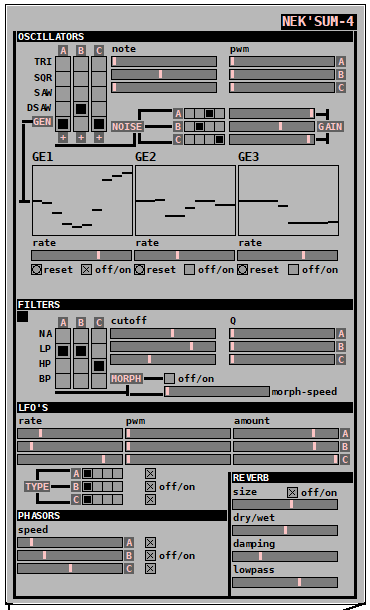
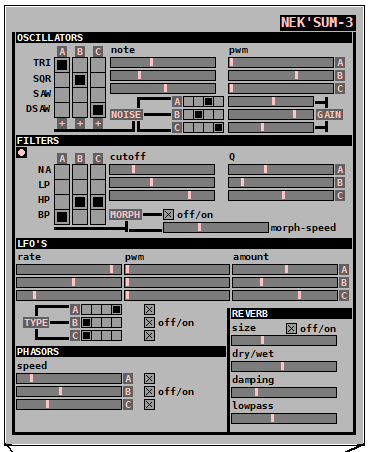
posted in patch~
[bang~] bangs before the end of a dsp block at startup
I was hoping to use [bang~] to tell me when a 1024 sample FFT was finished so I could process the results ASAP, but it often bangs after only 64 samples when DSP is first turned on. Here's my test patch after one such run:
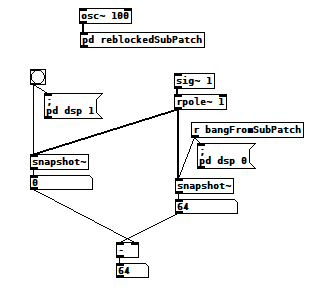 And here's what's inside the reblocked subpatch:
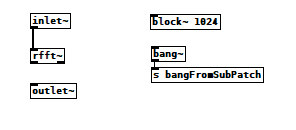 bang~runsAtTheEndOfEachDSPblock2.pd
After the first run it consistently reports 1024 as expected, but that first run usually shows 64, and only occasionally 1024. I saw 128 once, but haven't been able to reproduce it. I tried connecting the signal inlets and outlets in various ways but it didn't seem to matter. Am I overlooking something?
Update: I get similar results using [switch~]:
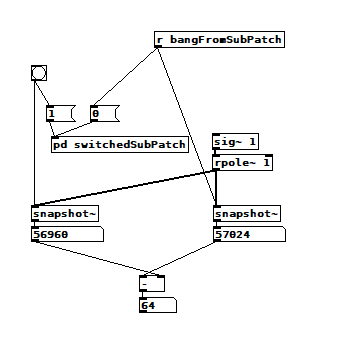 And the switched subpatch:
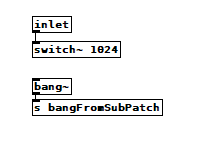 switch~ vs bang~.pd
Update #2: I added another test to the switch test and it contradicts the other two tests  When viewed from inside [pd switchedSubPatch2], [bang~] happens at the right time, But if I run the original test immediately afterward, it still shows 64. There must be something about reblocking I don't understand.
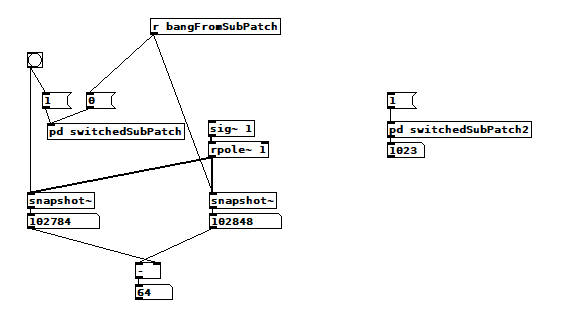 switchedSubPatch2:
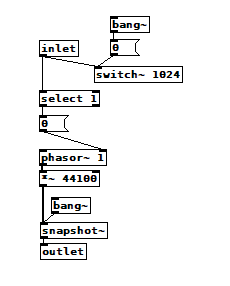 switch~ vs bang~.pd
posted in technical issues
Building a Linux Desktop
Yes and a topic that I like very much.
We're in 2020! Like I always say, we sent a spacecraft to the moon with a 2.048 MHz computer
@cheesemaster said:
-Ubuntu Studio, maybe an RME PCI card
Why RME PCI, you can find good external soundcard, I guess it depends on the computer that you will choose (more on that later). Yes I like Ubuntu Studio, good choice.
-Really only doing audio (oscillators, arrays, filtering, delays) No graphics.
Perfect, start pd with -rt -nogui
Use [pd~] only if topping 100% CPU (pd is single thread).
-Keeping the the machine quiet (low fan noise) is VERY important.
Fanless is possible, again depending on the computer you choose.
What CPU specs matter most for common audio and MIDI tasks in PD? Number of cores? Thread count? Clock speed?
Clock speed = lowest latency (you can push jack to buffer 64) without xruns. If you are not playing live (for example using ADC) you don't need low latency configuration (I am lucky and not very good at detecting latency, my setup is around 38ms (round-trip). You can detect latency using jack_iodelay.
RAM is important if you want to load samples in PD in advance (avoiding glitches).
NVMe SSD if you can.
If I run other apps (VCV rack, Carla, various Jack plugins) will those processes distribute to the other Cores?
Yes, again Pd is single thread. Others are usually better (GUI on a separated thead for example).
Does Pd benefit from a more powerful GPU card? Or will there be no difference if I use the GPU embedded in the CPU? Is it different if I launch Pd without the gui? (-nogui)
If you don't use Gem you don't need a dedicated GPU card.
Here's some ideas for you, I've been building some setup over the years:
Theremin à crayon:
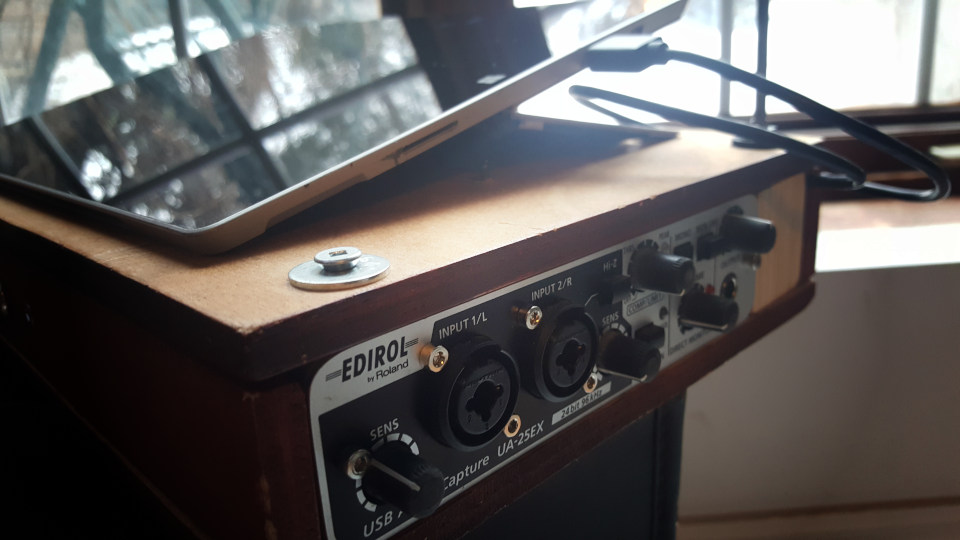
Using a Surface Pro 3 running Ubuntu Studio with a "old" USB 1.1 sound card. Heavy patch using lots of software : Bitwig, SooperLooper, Guitarix and of course PD. Midi (PD), OSC (Bitwig, SooperLooper). Very quiet but the Surface gets hot (fans are kind of quiet like a good laptop).
Heavybox:
https://www.workinprogress.ca/projects/heavy-box/
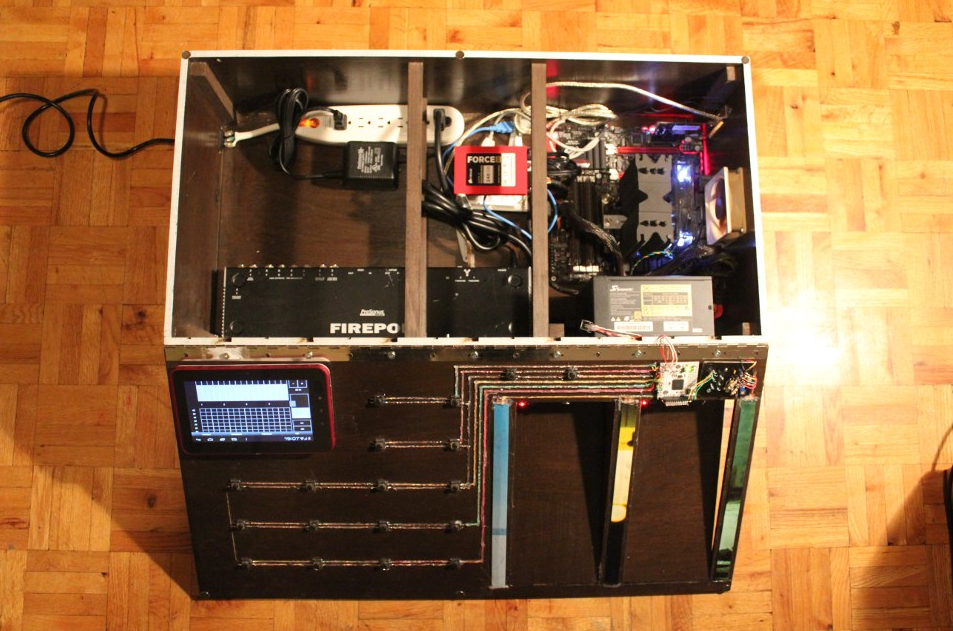
Similar setup, a quiet PC using a big heat sink and a overrated power supply so the fan never start. Noctura fan on the side (expensive but quiet). Old soundcard (firewire) but I can do low latency. 8 ins/8 outs.
Biscuit box computer:
https://www.workinprogress.ca/biscuit-box-computer/
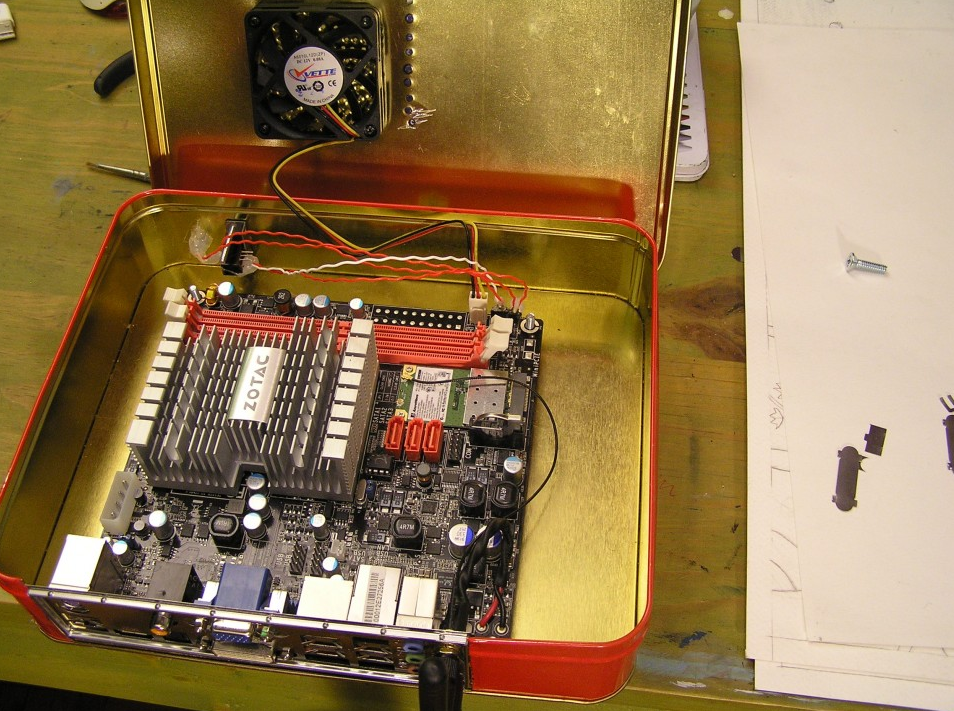
Mini-pc not quiet, not very fast in this case a cheap usb soundcard (you know +- 8$ barely better than the embedded one).
Phimatics:
A raspberry pi 2 with wolfson audio card. Using only PD with Alsa, I am getting very good result (low latency) quiest setup. But of course I need to be careful with the CPU.
JAS:
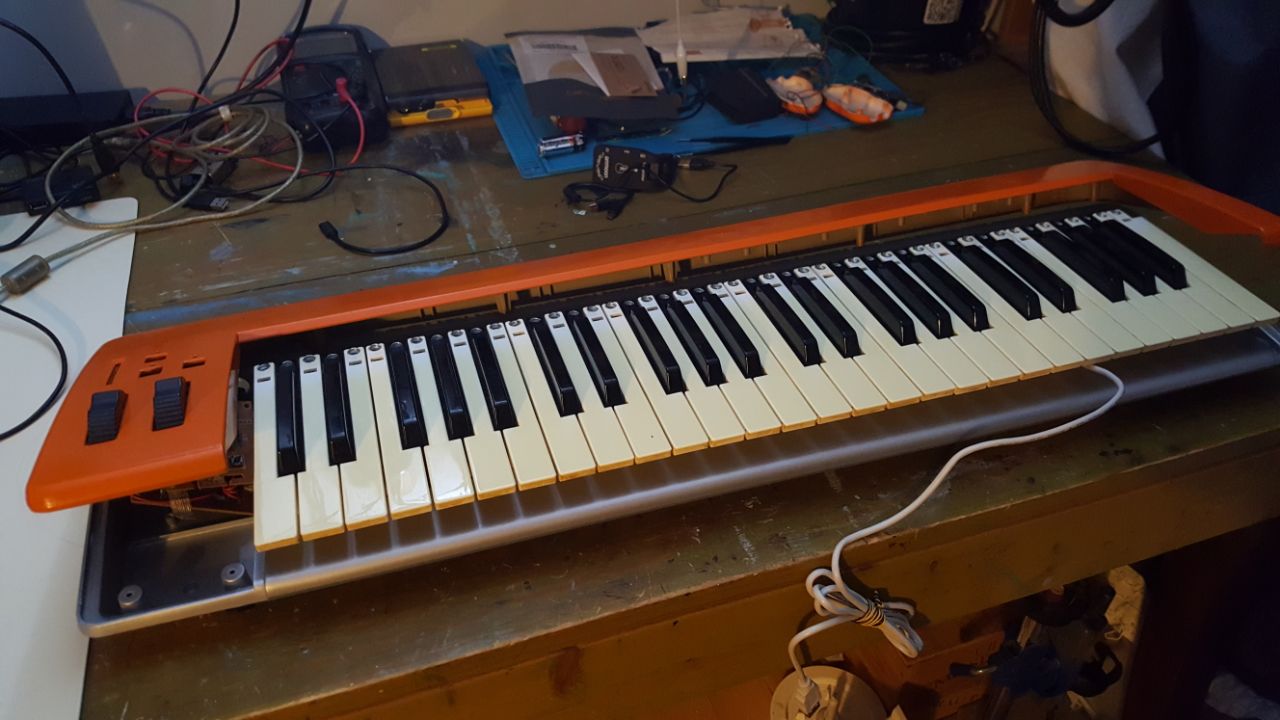
Working on a new project, I found this midi keyboard in the trash / snow. I will put Khadas VIM version 1 (ARM) with a BEHRINGER UCG102 (usb soundcard for guitar). Quiet, no fan can be run on a battery (5V). Will post the project when over.
Lattepanda:
Never worked with it, but looks very powerful. There's a price tag. Maybe for the next project.
Cheers
 posted in I/O hardware diy
Converting audio signals to binary with no externals ?
@seb-harmonik.ar , @whale-av Many thanks for help. So what i want to do is this :
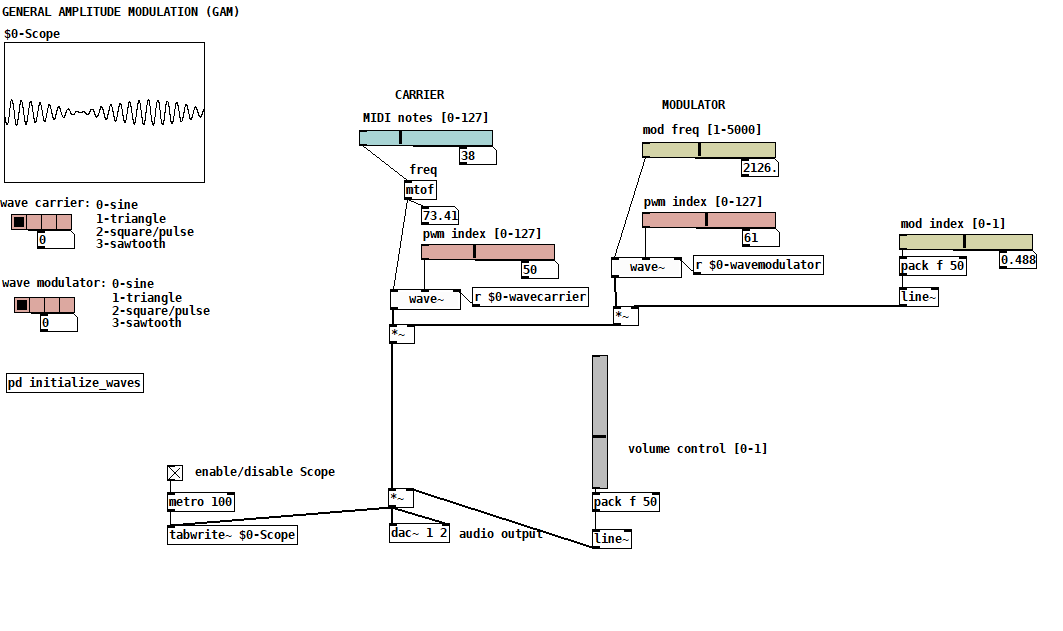
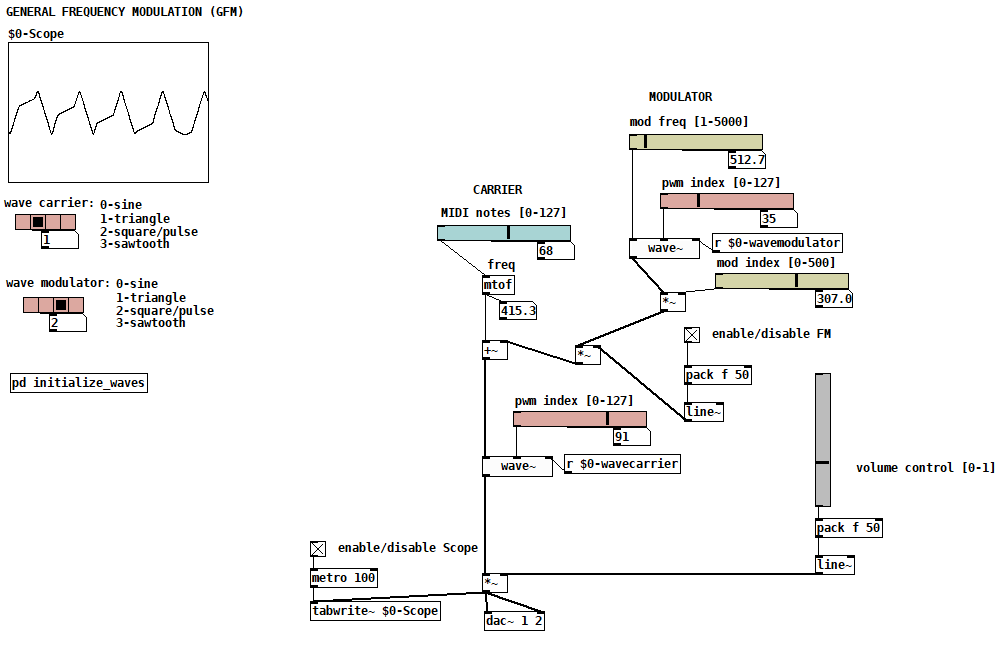
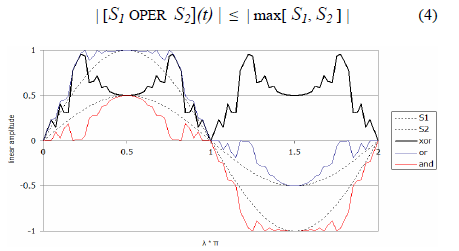
i want to have 2 oscillators (both sine waves. one a carry oscillator and the other one a modulator) with different frequency. And i want their audio signal to be processed in [expr~ ] using bitwise XOR modulation. This is different from [+~] , [-~] , [*~] , [/~]. This paper describes this in detail.
Here is a plot of the waveform result using bitwise XOR (from the paper above) :
Here is a schematic view of the oscillator structure :
So to control both oscillators i need to control the theta (phase) , f (frequency) and A (linear amplitude). Also S1 is unipolar. So the idea is that i can use the basic operations on the audio signals like (addition,multiplication,bitwise OR,bitwise AND) or i can use something different (bitwise XOR). So i tried to make somehow the bitwise XOR using a formula : bitwise XOR equivalent <- (S1 | S2) - (S1 & S2) (not working). The bitwise operations like "&" and "|" works for [expr] not [expr~].
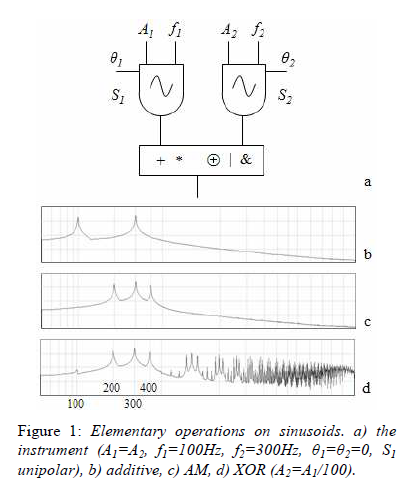
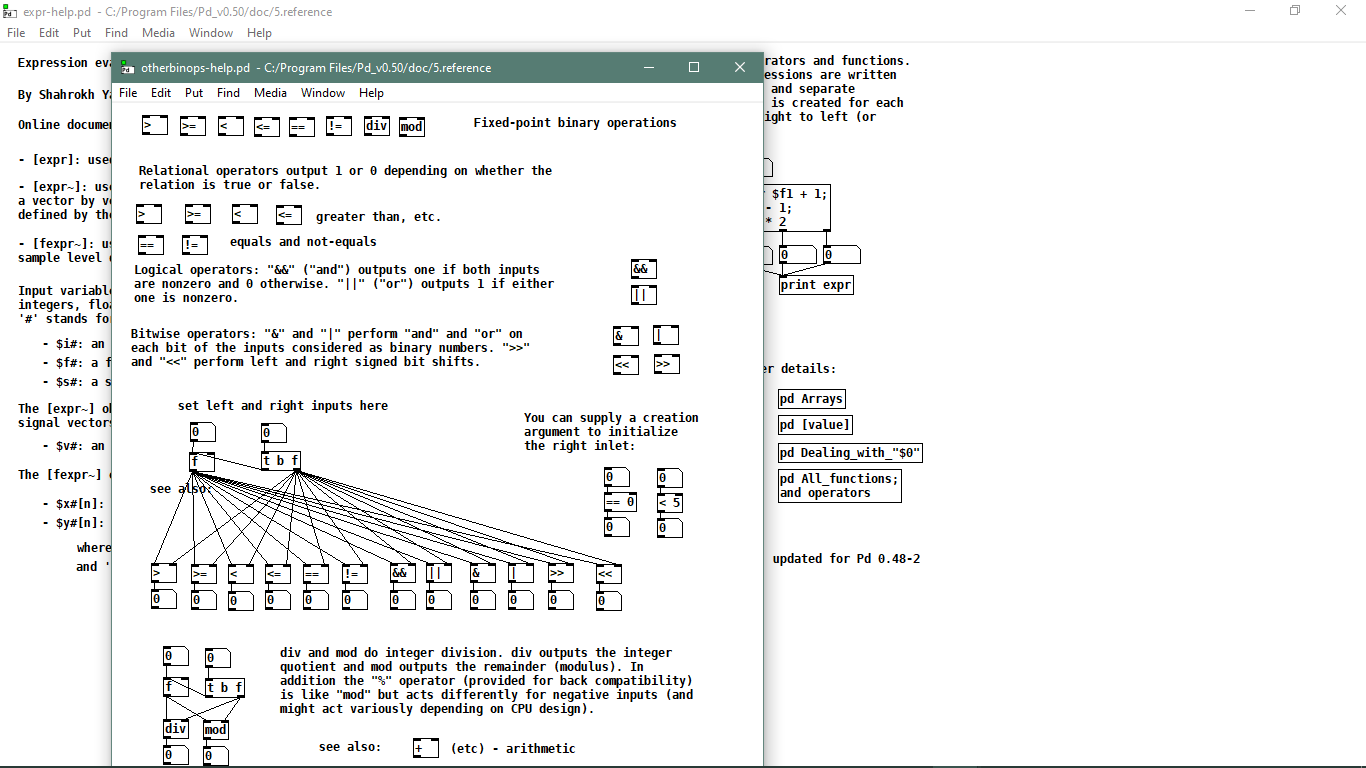
Also i just found this about [expr~ ] object so maybe i am missing something or i am wrong
What is this operator "^" it is bitwise XOR ? or exponential ? or something else ?
Thanks to all a lot for the help. I also tried what @alexandros was talking about and it is almost working. But the waveform is really off so i need to learn more about this idea.
posted in technical issues