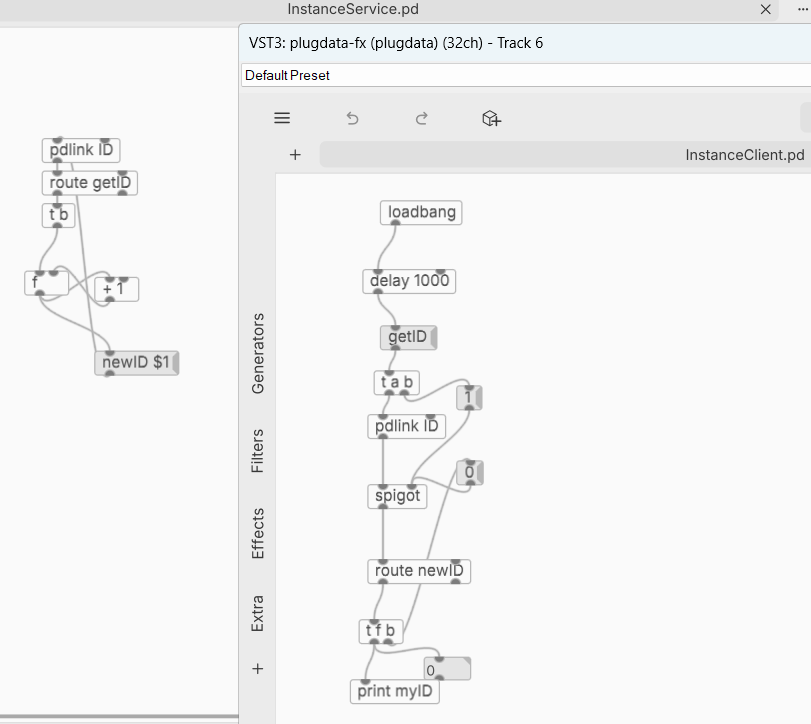
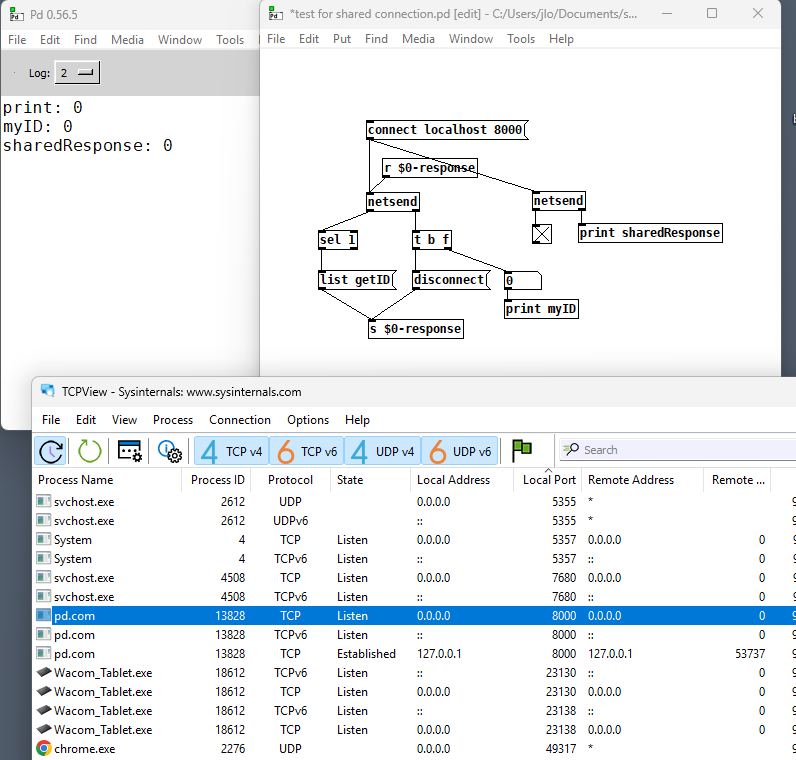
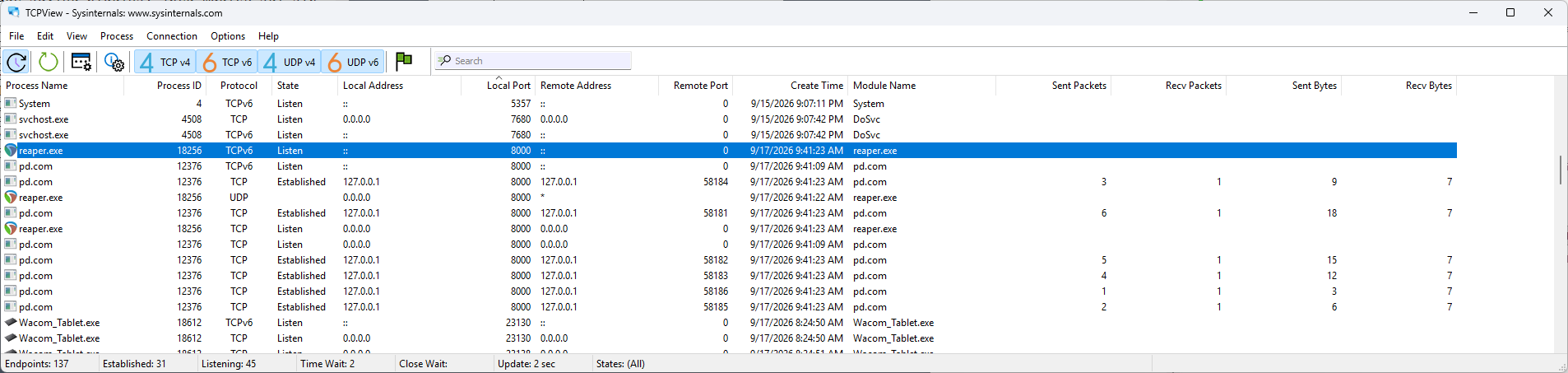
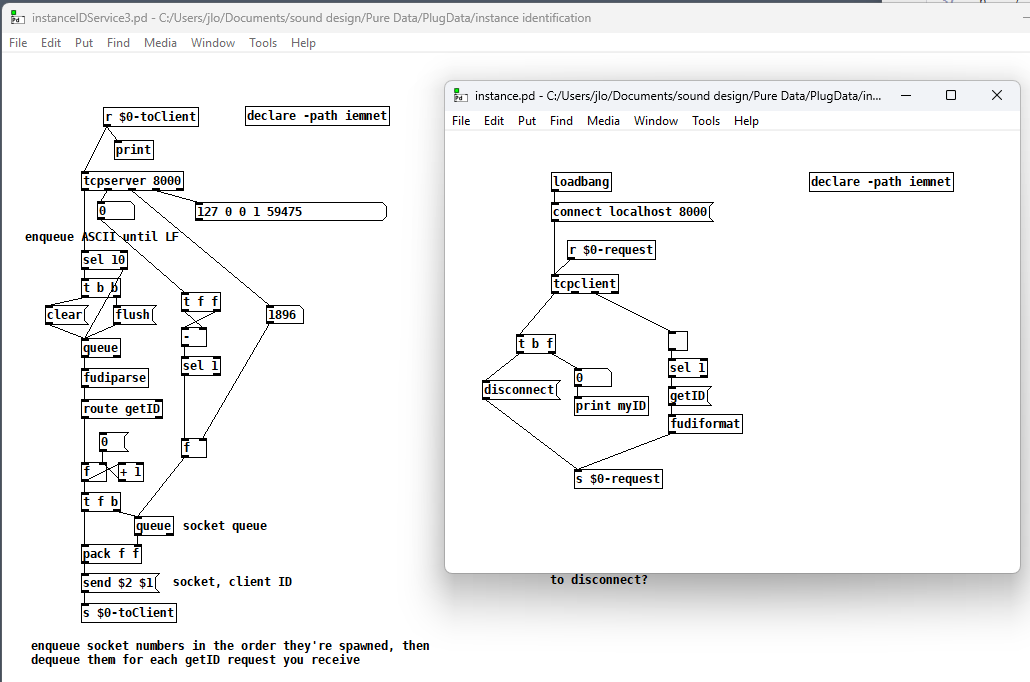
I tested with instances running on 2 different machines, and I left the connections open. The "backwards" response to the second instance was also sent to the first instance! So this must be the expected behavior of "backwards", can anyone confirm? i.e. it sends a message back to all connected clients.
I also noticed that [netreceive -f 8000] adds a right-most outlet that lists the originating IP address and port of the incoming connection. It reports the same info as TCPView. If instead of using the "backwards" feature, I try making a netsend connection to the originating IP address and port, the connection is refused. So "backwards" is not the same thing (which is probably obvious to anyone who knows networking).
I see that you can tell the server what port to use for replies if you use UDP, but if the instance could know which ports in a pool of ports were available, then it could derive its own ordinal ID, e.g. if 5 of the ports are already taken, then we must be Number Six (but we would still not know who is Number One).
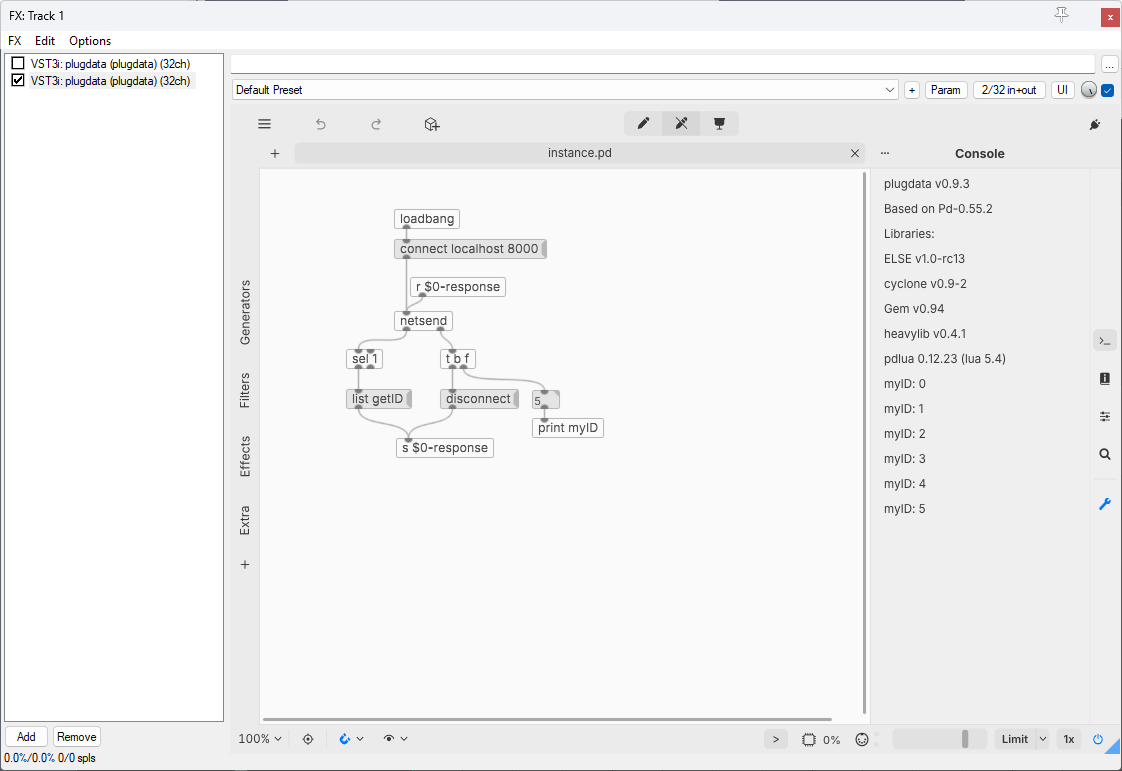
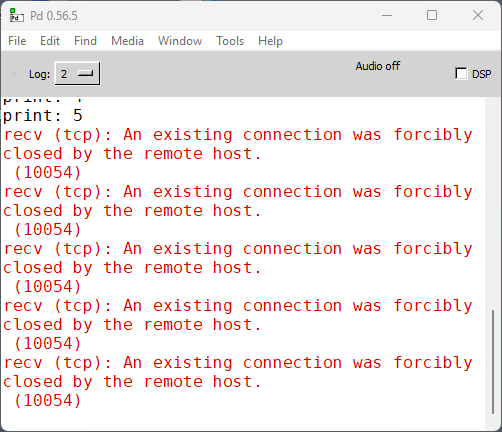
I added a toggle to show whether [netsend] thinks the connection is open and a numberbox to show how many connections [netreceive] thinks are open, and in the REAPER plugin test, each instance thinks it's open even when nothing is listening on localhost:8000, and there is no error message in any plugdata console. Even weirder, each instance thinks it's closed after the [disconnect( is issued, even though both TCPView and instanceIDService report 6 open connections. Is this a plugdata issue? What other tests would you perform to investigate further? The standalone tests all behave similarly in standalone plugdata.
Finally, I have a theory for why the plugin behavior differs from the standalone behavior. In the latter case, the instances are instantiated so quickly that only the first backward message gets broadcast before all instances disconnect. But REAPER has a lot more work to do, initializing each track, loading plugdata and then restoring plugdata to its saved state, so there's more time between instantiations. The fact that the connections aren't being closed explains why the first instance sees all 6 replies, the second sees the last five, ..., and the last only sees the last reply. So if I make each instance ignore all but the first reply, I get the result I wanted! But in my working life as a programmer, I and my colleagues would've pejoratively called that a hack because it depends on REAPER's timing, which is unspecified, so I'm not really celebrating. For instance, if I run the instanceIDService as the first VST plugin, things are broken.
I'm also going to go out on a limb and say that I think [netreceive] is under-featured. In a Python example I found, they create a socket, bind it to a port, and start it listening. When a client connects, the socket returns a connection from/to which you get/put data. [netreceive] seems to be acting as both the socket as well as the aggregate of all the connections. That's not right! (Or is it?)
test instance ID.zip


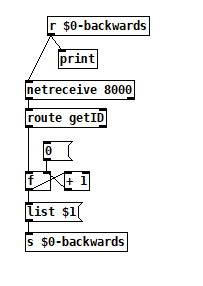 And here's the instance:
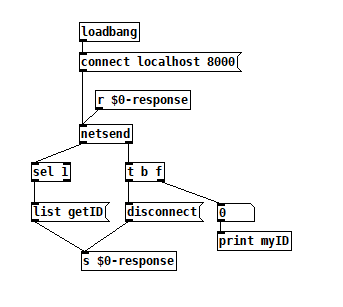 If I just clone the instance 5 times and run everything outside the DAW, the instanceIDService appears to get 5 ID requests but every instance receives only the first response.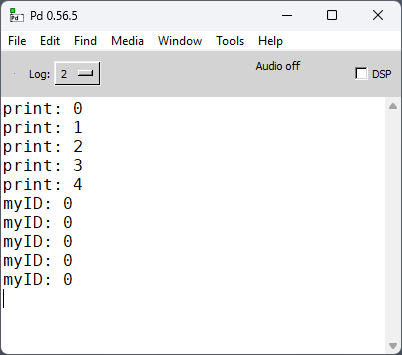

 .
.