
Purr-Data build dependencies
Hi there,
I'd like to compile Purr-Data for Ubuntu Studio 25.10. since the provided OBS downloads only support Ubuntu 25.04 at the moment. Unfortunately, the dependency list in the Purr-Data GitHub wiki is outdated and not distro-specific. I tried to contact Albert Gräf, who seems to maintain the wiki and the OBS downloads, but did not get a reply.
Is someone able to provide an up-to-date dependency list for Ubuntu? Purr Data is a complicated package with many parts and dependencies.
Thank you in advance!
BTW: I was surprised to see that plugdata does not provide a binary package for Ubuntu 25.10 either.
 posted in technical issues
Puredata on android phone using andronix: no sound!
@sadielcuentas Andronix uses pulseaudio to send a stream to the speakers, and pulseaudio is the intermediate layer for alsa. It will need to be enabled..... https://docs.andronix.app/troubleshoot/sound/
You will then need the appropriate modules for pulseaudio....... https://wiki.archlinux.org/title/PulseAudio
..... and you might need to configure Ubuntu to enable Alsa?
That link says you don't need to add your user to the audio group..... but I have seen people having problems with Pd audio if they have not done so...... including in the link below.
But @1mark had a solution years ago that might work still...... for Pd streaming directly to pulseaudio....... https://forum.pdpatchrepo.info/topic/11146/ubuntu-browsers-and-puredata-wont-share-audio-output-device-solved/3 (you will need to expand the down arrow probably to read it).
That thread could solve all your problems.
David.
 posted in technical issues
Newbie struggling to find "demux" object - please help
@pharaoh-sean The inlets and outlets sort of "cling on" even when the object will not create because they were there when the help file was made.
For "Find externals" (which is Deken in fact) you should just search for just simply ....... zexy
If you are unsure which one (sometimes there is a choice) then post a screenshot of what it offers.
If it says...... cannot be found..... then you could install extended..... this could help (ignore that it says Ubuntu and look at Gilberto's post)...... https://forum.pdpatchrepo.info/topic/9161/how-can-i-install-pd-extended-on-ubuntu-14-10
If still no good you would have to compile from source...... http://puredata.info/downloads/pd-extended which is usually easy in Linux......... BUT it will be 32-bit so if you are running a 64-bit only OS then it will not work.
Or of course compile zexy from source...... https://git.iem.at/pd/zexy/
If you just really need [demux] and only [demux] I have made you a simple abstraction to do the same thing.
You will have to look inside and change it if you need for example [demux 1 2 3 4 5 6 7 8]
I made it for [demux 1 2 3 4]
You would just need to change the [route 0 1 2 3] to [route 0 1 2 3 4 5 6 7] and add another 4 outlets.
demux.zip
David.
posted in technical issues
Serial communication method which is native to vanilla
@liamorourke More here..... https://forum.pdpatchrepo.info/topic/11567/solved-anyone-using-mobmuplat-having-some-port-number-issues
Are you still planning to run Ubuntu alongside Android though? If you are you can use the Mobmuplat wrapper to set up communication between them (Mobmuplat GUI in Android and Pd in Ubuntu).... see that thread...... and in Pd..... running in Ubuntu..... you can use [comport] for the Arduino...... maybe.....?
David.
posted in technical issues
Building a Linux Desktop
Yes and a topic that I like very much.
We're in 2020! Like I always say, we sent a spacecraft to the moon with a 2.048 MHz computer 
@cheesemaster said:
-Ubuntu Studio, maybe an RME PCI card
Why RME PCI, you can find good external soundcard, I guess it depends on the computer that you will choose (more on that later). Yes I like Ubuntu Studio, good choice.
-Really only doing audio (oscillators, arrays, filtering, delays) No graphics.
Perfect, start pd with -rt -nogui
Use [pd~] only if topping 100% CPU (pd is single thread).
-Keeping the the machine quiet (low fan noise) is VERY important.
Fanless is possible, again depending on the computer you choose.
What CPU specs matter most for common audio and MIDI tasks in PD? Number of cores? Thread count? Clock speed?
Clock speed = lowest latency (you can push jack to buffer 64) without xruns. If you are not playing live (for example using ADC) you don't need low latency configuration (I am lucky and not very good at detecting latency, my setup is around 38ms (round-trip). You can detect latency using jack_iodelay.
RAM is important if you want to load samples in PD in advance (avoiding glitches).
NVMe SSD if you can.
If I run other apps (VCV rack, Carla, various Jack plugins) will those processes distribute to the other Cores?
Yes, again Pd is single thread. Others are usually better (GUI on a separated thead for example).
Does Pd benefit from a more powerful GPU card? Or will there be no difference if I use the GPU embedded in the CPU? Is it different if I launch Pd without the gui? (-nogui)
If you don't use Gem you don't need a dedicated GPU card.
Here's some ideas for you, I've been building some setup over the years:
Theremin à crayon:
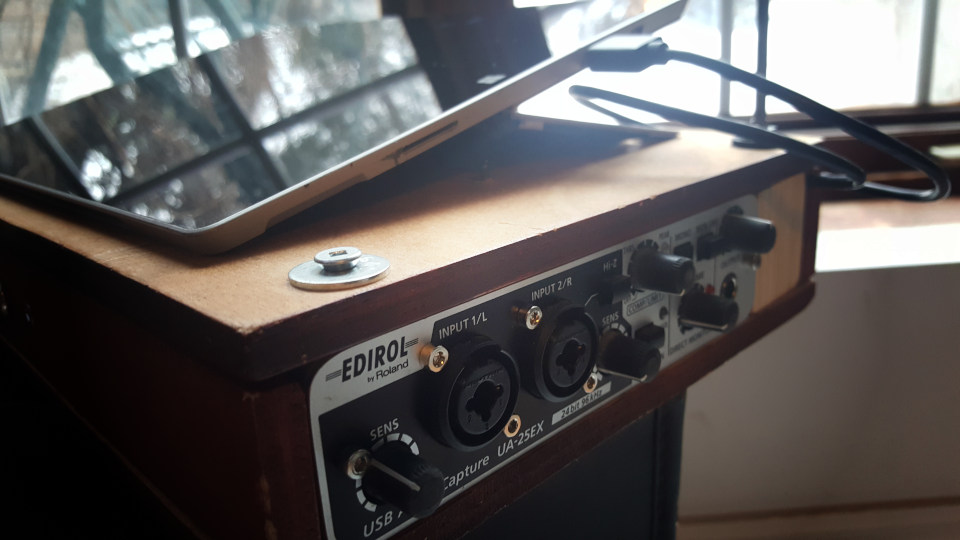
Using a Surface Pro 3 running Ubuntu Studio with a "old" USB 1.1 sound card. Heavy patch using lots of software : Bitwig, SooperLooper, Guitarix and of course PD. Midi (PD), OSC (Bitwig, SooperLooper). Very quiet but the Surface gets hot (fans are kind of quiet like a good laptop).
Heavybox:
https://www.workinprogress.ca/projects/heavy-box/
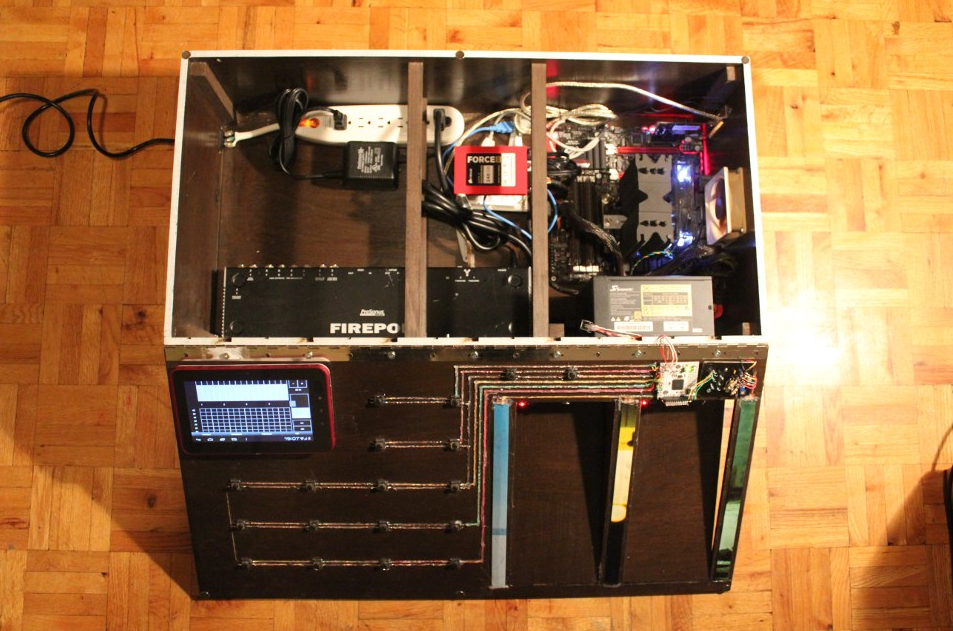
Similar setup, a quiet PC using a big heat sink and a overrated power supply so the fan never start. Noctura fan on the side (expensive but quiet). Old soundcard (firewire) but I can do low latency. 8 ins/8 outs.
Biscuit box computer:
https://www.workinprogress.ca/biscuit-box-computer/
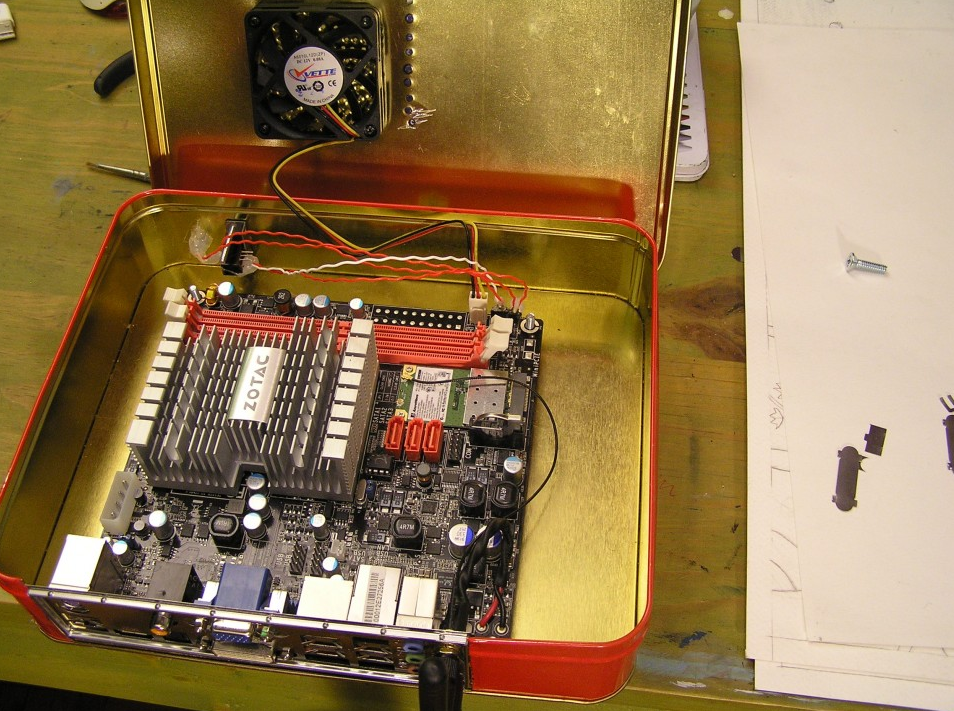
Mini-pc not quiet, not very fast in this case a cheap usb soundcard (you know +- 8$ barely better than the embedded one).
Phimatics:
A raspberry pi 2 with wolfson audio card. Using only PD with Alsa, I am getting very good result (low latency) quiest setup. But of course I need to be careful with the CPU.
JAS:
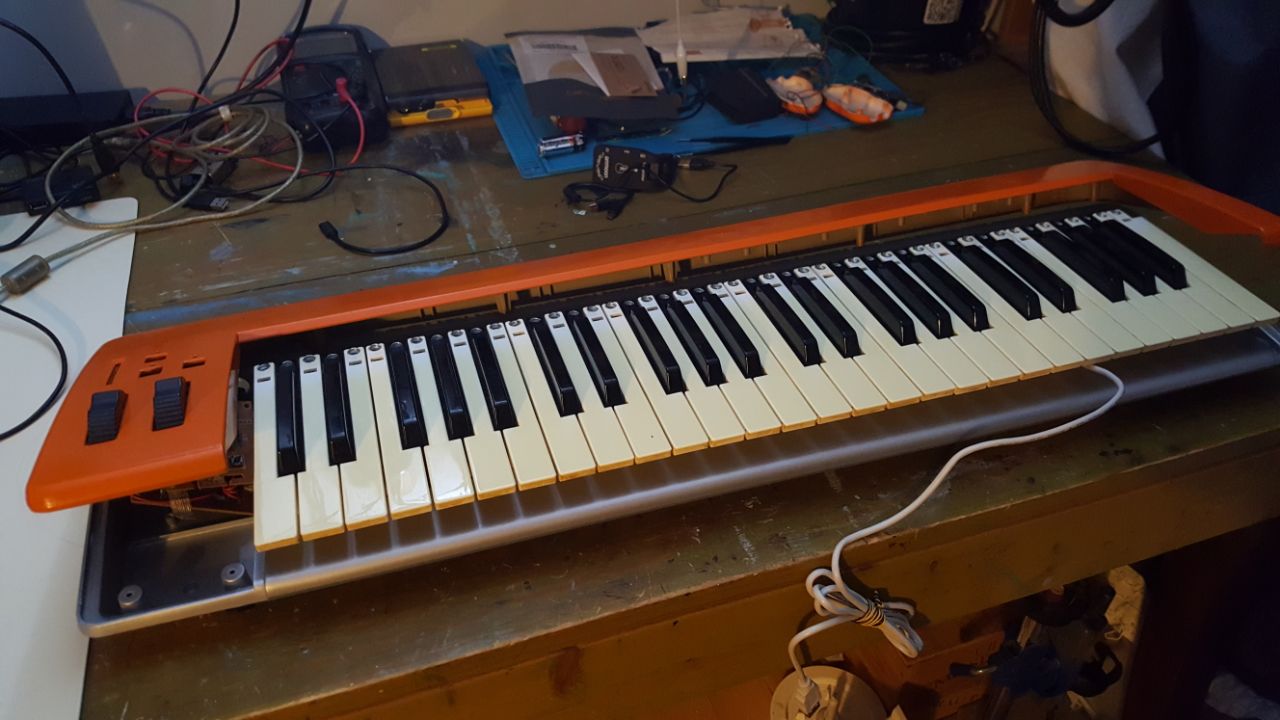
Working on a new project, I found this midi keyboard in the trash / snow. I will put Khadas VIM version 1 (ARM) with a BEHRINGER UCG102 (usb soundcard for guitar). Quiet, no fan can be run on a battery (5V). Will post the project when over.
Lattepanda:
Never worked with it, but looks very powerful. There's a price tag. Maybe for the next project.
Cheers
 posted in I/O hardware diy
Install Purr Data on Linux (Ubuntu Studio)
I can't remember all the little differences between the various Ubuntu flavors.
Albert has a repo for xubuntu here. You could give it a shot using the instructions here:
https://github.com/agraef/purr-data/wiki/Installation#ubuntu
If you get dependency errors after apt install purr-data it means we'll have to compile specifically for Ubuntu Studio. Otherwise you should have a fully working install.
 posted in technical issues
Purr Data on Ubuntu 18.04?
After posting about UI woes (and subsequently withdrawing that post), I started looking into Purr Data.
It appears to be quite difficult to install in Ubuntu 18.04.
At https://github.com/agraef/purr-data/releases, there is no .deb for Ubuntu 18 (only for 14 and 16). pd-l2ork-2.9.0-20190416-rev.2b3f27c-x86_64.deb fails to install:
dpkg: dependency problems prevent configuration of pd-l2ork:
 pd-l2ork depends on libgsl2; however:
  Package libgsl2 is not installed.
Ubuntu 18 does not have libgsl2. It has libgsl23 -- which is installed on my system, but does not satisfy the dependency.
https://launchpad.net/~dr-graef/+archive/ubuntu/pd-l2ork.bionic is supposedly a PPA for Ubuntu 18.04. After adding it:
$ sudo apt-get install purr-data
The following packages have unmet dependencies:
 pd-l2ork : Depends: libgsl2 but it is not installable
            Recommends: ladspa-foo-plugins but it is not going to be installed
            Recommends: slv2-jack but it is not installable
 purr-data : Depends: libavifile-0.7c2 but it is not going to be installed
             Depends: libmpeg3-2 (>= 1.8.dfsg) but it is not going to be installed
             Recommends: ladspa-foo-plugins but it is not going to be installed
E: Unmet dependencies. Try 'apt --fix-broken install' with no packages (or specify a solution).
I haven't looked into the "not going to be installed" packages, but I already know what "not installable" means -- at least, libgsl2 doesn't exist for my Ubuntu version -- https://packages.ubuntu.com/search?keywords=libgsl2 shows "Package libgsl2 -- xenial (16.04LTS)" only.
Neither agraef nor jonwwilkes' Purr Data github repositories allow issue reports (only pull requests). So I can't ask the distributors.
I guess I could try to build it myself...? But, if the currently available release packages are not really compatible with with current Ubuntu LTS, that's not a very good situation.
hjh
 posted in technical issues
OSC and Ubuntu
Hi, I am working on a project involving OSC communication between PD and Processing. On my Manjaro linux (Arch), my patch works fine on a PD v. 0.48. However the project is supposed to run on a Ubuntu machine, and I can’t make it work properly. The patch attached doesn’t find objects such as [oscparse] or [oscformat] (the object’s borders are dashed). If I remember correctly, I installed it using Help > Find externals of the 0.48 version. But Ubuntu comes with a 0.45 version and I encounter difficulties to upgrade it or to install the OSC library manually.
Can you help me to solve my problem, either by pointing how I can install the OSC library, or how I can install PD 0.48 on Ubuntu linux?
 posted in technical issues
Purr Data and Fedora 26 (*again*)
@brendanmac Fedora uses its own package format called RPM.
I usually don't get involved in distro wars. But unless there is a requirement that you use Fedora I would strongly suggest using a distro like Ubuntu. It doesn't use RPM packages but instead uses so-called "deb" packages. It has more documentation, a greater variety of users (non-technically and technical users), and it is geared toward new Linux users.
You've already hit installation bugs with both Purr Data and Pd Vanilla. Fedora is a great distro, but for small software projects like Pd you are much more likely to find support, documentation, and ease-of-use in an apt-based distro like Ubuntu (or Debian, or Linux Mint, or any other distro that uses "deb" packages). Problems like these are going to quickly pile up as you try out various Linux audio programs because those maintainers don't have time to create and maintain an RPM in addition to deb packages. (And deb is by far the more popular package format.)
Just to give you an example-- without any coordination whatsoever Albert Graef swooped in and started an Ubuntu "PPA" for Purr Data (which-- again-- uses "deb" packages). That means you can install Purr Data on a stable version of Ubuntu and get Purr Data updates whenever you update the system. Alternatively, nobody has touched the old Pd-extended RPM for years.
I use Debian and Ubuntu. IOhannes is a Debian member and maintains deb packages for Pd Vanilla. Use a "deb"-based distro like Ubuntu and you'll have a much easier Linux experience. :
posted in technical issues
KX Studio experiences with Pure Data
@geraldbiggs I'm not sure what the potential complications you're referring to are, but I will say that I've been using KXStudio as my primary/nearly-only environment for about two years now, and I love it. I used the ISO they provided (instead of adding repos to another flavor), which is currently Ubuntu 14.04 with KDE. Really, it's just Ubuntu with KDE... but lots of nicer, fancier audio stuff worked almost immediately (I say "almost" because this was a couple of years ago, but I don't remember any problems).
So I guess I'm wondering why you'd want a dual-boot with Ubuntu & KXStudio (if that's what you're saying), because KXStudio runs as well as any non-audio-based Linux I've used.
And PD & SC (and Reaper, under Wine, though there's also a native now) are what I usually use, too.
 posted in technical issues