
(2) PureData | Arduino serial tutorial
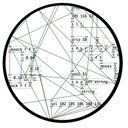
Arduino reads the digitis of a number as ASCII. For example the number 100 should be sent as a list like this [49 48 48( where 49 is ASCII 1 and 48 ASCII 0. If you want to send more than one number at the same time, you'll have to separate them with a space, so [100 200( would be [49 48 48 32 50 48 48( where 32 is ASCII space.
If you want to use a slider you'll have to parse the digits of the incoming number and add 48 to each digit (ASCII 0). I've already made a patch that does this, but for now I'll leave it to you, it's a better lerning process. If you can't make it, come back and ask for help
 posted in I/O hardware diy
(2) PureData | Arduino serial tutorial
Thanks for the quick reply. I can't find much documentation on Serial.parseInt on the reference page?
I have to browse the web for some examples, so I can figure it out somehow. Regarding ASCII i suppose Pd should send i.e. 88 for the arduino to pick up an X ?
This is what I have for the Arduino so far...
int red = 9;
int green = 10;
int blue = 11;
int R = 0;
int G = 0;
int B = 0;
void setup() {
Serial.begin(9600); // opens serial port, sets data rate to 9600 bps
pinMode(red, OUTPUT);
pinMode(green, OUTPUT);
pinMode(blue, OUTPUT);
}
void loop() {
// send data only when you receive data:
if (Serial.available() > 0) {
int R = Serial.parseInt(); // R ASCII DEC 82
int G = Serial.parseInt(); // G ASCII DEC 71
int B = Serial.parseInt(); // B ASCII DEC 66
// say what you got:
analogWrite(red, R);
analogWrite(green, G);
analogWrite(blue,  ;
;
}
}
What module/message should I put in pure data between comport and the slider, to hold the ASCII decimal in order for sending the right value?
Thanks again.
 posted in I/O hardware diy
Composing Indian Raga using Pd
Composing Indian Raga using Pd:
A raga is a melodic recipe for a mood. In Hindustani (North Indian) classical music, each raga has certain moods associated with it, and usually has a specific time of day and/or season in which it is meant to be played. Raga could be described as a "super scale" using a set of notes in ascending (arohi) and descending (avarohi) order, sometimes including prescribed alternate or zig zag routes (vakra chal), a hierarchy of note importance including king notes (vadi) and prime minister notes (samvadi) a fourth or fifth apart, and a key phrase that shows the heart of the movement of the raga (pakar).
This ancient system is both an art and a science of how musical notes create certain moods. Western music also recognizes that note order and hierarchy create a mood, with some theory texts noting that songs in major keys tend to communicate happiness while songs in minor keys show a feeling of sadness. But the rags show precisely how to create a specific mood. The recipe for each raga holds the key to an unlimited number of potential melodies, each perpetuating the mood or rasa contained in the raga, but each a unique work of art.
Study of this system can be of great benefit to any composer or improvising musician.
Ravikiran has composed and presented several concerts with top caliber artistes from many parts of the world featuring melharmony. He has arranged several melharmonic pieces for performances by full sized, medium sized or chamber orchestras. Some of these are in collaboration with composers such as Prof Robert Morris and Charles Demuynck, Toronto, Canada.
Ravikiran's melharmonic compositions endeavours to enrich both melodic and harmonic systems. Flavoured with exciting and often highly original rhythmic patterns, his compositions have started blazing a new trail in world music. One of his creations, Ujjwal, a full-fledged, first of its kind 45-minute long Melharmonic Concerto was presented in the Swar Utsav Festival at India Gate, New Delhi to an audience close to 20,000 people.
Melharmonic concerts in cities such as Boston, London, New Delhi, Toronto, Mumbai, San Jose, Austin (TX), Chennai, Bangalore, Tulsa (OK) at times in collaboration with top calibre artistes and groups from diverse parts of the world have also won plaudits.
 posted in technical issues
Last reminder EMERGEANDSEE media arts festival 2011
Last reminder EMERGEANDSEE media arts festival:
submit your SHORT FILMS / ABSTRACTS / INSTALLATIONS and other AUDIO/VISUAL WORKS until MARCH 15! ___ This year's topic is EN DÉTAIL
Call for participation
Since 2000 the EMERGEANDSEE media arts festival offers an independent work showcase of young audio-visual works from all over the globe. Within the interaction of short film competition, audio-visual exhibition and lectures different works and opinions come together. With EMERGEANDSEE 2011 the festival`s focus is turned to “En Détail” and the smallest things on the fringes of our daily perception, thinking and creating, which challenge our attention and sharpen our wits, independent from the connection to the big scheme of things.
For this we are looking for your position!
Artistic and theoretic perspectives on and examinations of the detail, which will be presented in Berlin in June 2011. With pictures, thoughts, sound or gestures you can add your detail to EMERGEANDSEE 2011...
Call for entries/papers:
<http://emergeandsee.org/call-for-entries/>
PDF version:
<http://emergeandsee.org/wordpress/wp-content/uploads/2010/12/Cfe-2011-en.pdf>
You can submit:
- Short films up to 20 minutes long for the big screen
- Audio/visual installations, pictures, loops, performances for the exhibition
- 20-minute contributions leaving some room for discussion and exchange for the lecutres
>> Short films
Within the short film competition, innovative feature films, animations, documentaries and experimental worlds of images from around the globe will explore the topic of the detail in the eye of the jury and the audience.
>> Exhibition
Within the exhibition no boundaries should restrict the artistic medium: performances, sound productions for the “audio-cinema”, visual artistic works, video installations, cross-medial works, etc. all toy around with the detail.
>> Lectures
Within the lectures, thinkers and makers from diverse areas (social & cultural sciences, natural sciences, media and art, etc.) will gather. Here, we are looking for new theories and ideas presented via short lectures.
Submissions for all sections until 15.03.2011 under:
http://submit.emergeandsee.org
For more details on each section please have a look at the webpage:
http://emergeandsee.org
Philipp from the EMERGEANDSEE-team
 posted in news
PureData external set for refactoring
Hello everyone.
I had a good idea to make PureData able to do everything, by using some open source libraryes wich have to be turned in externals.
Here are the new features:
html/css/javascript engine for browsing (don't know libraryes except wxWidget)
cd/dvd burning (cdrtools)
file [de]compression (zlib)
ocr (tesseract)
text to speech (festival)
ascii art (aalib)
generic grid control like in spreadsheet, but not limited to it (just know wxWidgets)
neural networks (fann)
finite state machines (gfsm)
astar (micropather)
skeletal animations for gem (cal3d)
target file formats:
audio wav, ogg, mp3, cdaudio
image png, jpg, bmp, gif, tga, svg
3d collada
text txt
video avi (divx, xvid, microsoft), mp4, mpeg2 (dvd), mpeg (vcd)
I'm not a C programmer, just a technical artist. So I can't do it myself. Anyway, I consider donating money toward this goal.
Bye, Berserk.
.
 posted in extra~
Make art - call for projects "in-between design" - deadline 31st July
_
_ _ ____ _ _ ||
| | | | ||_ | | || | |
| || | | || | | ||| | |_____
| | || | | | ____ | | | | |
| | | | | | | | | | || | |_
|| || || || || || ||
|| ____ _______ _________
|| || | | | | _
| || | | ||| | | || ||
from | __ | | _ | | |
4 to 7 | | | | | | ||__ ||
NOVEMBER 2010 || || || |_| ||
*CALL FOR PROJECTS*
The sixth edition of make art – in-between design: rediscovering
collaboration in digital art – will take place in Poitiers (FR), from
the 4th to the 7th of November 2010.
make art is an international festival dedicated to the integration
of Free/Libre/Open Source Software (FLOSS) in digital art.
make art offers performances, presentations, workshops and an
exhibition, focusing on the encounter between digital art and free
software.
*in-between design: rediscovering collaboration in digital art*
Today's market production accelerates the spread of non-critical and
standardized aesthetics, by means of locked top-down distribution
mechanisms and a series of tools that enforce it. At the same time
new forms of methodologies inspired or powered by free software,
participatory practices and peer-to-peer networks are fueling many
Internet subcultures. Some of these emerging practices will lead to
competitive social productions, while other will remain as pure
artistic experiments.
By adopting production and distribution methods based on free software
and open standards and by sharing the sources of one's work with
others, the collective knowledge base and aesthetic sensibilities can
freely interact to explore uncharted, hybrid directions which no
longer reflect the supremacy of a single idea.
- Does the sharing of artworks "recipes" and tools help debunk
the myth of the isolated design genius? - By leaving the possibility of ongoing development and refinement,
is it possible to ever produce a "final" design? - Can these methods and technologies inspire new forms of creation or
tools, beyond self-referential productions? - Is it wishful thinking to approach collaborative graphical design
in the same way as an open source software project? - Is Free and Open Source licensing a catalyst for creation or does
it add an extra level of complexity? - Can the limitation of one license trigger new forms of constrained
creativity?
We're currently seeking new, innovative media art and design works and
projects focusing on the above theme and questions:
- graphical artworks and installations
- lectures
- project presentations
- software and hardware demos
We're also seeking audiovisual performances that will take place
during the festival evenings.
The submitted projects must fit this focus and be made in a free/libre
and open source environment, this includes both its optional
dependencies or production tools and the operating system. We are
asking you to publish the sources of your project under a free culture
license of your choice or release it into the public domain.
Projects that do not meet these criteria will not be considered.
*How to apply*
Submission form and a list of additional requirements are available at:
http://makeart.goto10.org/call/
Deadline: *Saturday 31 July 2010*
Incomplete or late applications will not be processed.
*Timeline*
31st of July 2010 – Deadline call for proposals
Beginning of September – Selected projects notifications
4th-7th of November 10 – make art 2010 - Poitiers (FR)
For examples of previous editions, please visit the archives :
http://makeart.goto10.org/
make art is powered by GOTO10
 posted in news
Call for Papers and Presentations : Free and Open Source Software Pane
Call for Papers and Presentations : Free and Open Source Software Panel Session at CAA 2011
Deadline Extended: May 24, 2010
Fight the Power: Open Source, Free Software, and Critical Digital Practice
We invite proposals for papers and presentations for a panel on creative Free/Open Source Software at the College Art Association Conference in New York, February 9-12, 2011.
Digital technology has become a standard tool for artists working in both new media and traditional forms, just as it has become enmeshed in ever aspect of contemporary life. The Free/Open Source Software movement has recently emerged as an alternative model to the traditional software industry. This panel explores the use of Free Software in the studio and the classroom. What possibilities can it open for students, and how does it impact our teaching? How does it fit into professional creative work? Can the ideas behind “open source” be applied to other forms of collabo-
ration? This panel seeks papers and presentations addressing the use of open source software in studio practice and pedagogy, the state of the art in free creative software, and the nature of cultural production in a digital society.
Please submit proposals and queries to
Ben Chang
ben@bcchang.com
For the full conference call for participation, visit http://www.collegeart.org/proposals/
All participants in the conference must be members of CAA. For more information, visit www.collegeart.org.
 posted in news
Could really use some help please.
Ok, so heres my problem... Well first off i guess i should explain myself. I am a High School art teacher currently teaching an Arts and Technology class.. I found this program and it is awesome. The kids seem to like it and i really think its pushing ideas of art and technology.
The students have been doing some interesting stuff and as we get deeper into the program they are definitely surprising me! Anyway the end goal is to create some interactive visual pieces that deal with imagery and social justice issues through the program..
they are well on their way but im having trouble figuring out how to record their final pieces into a dvd format or a quicktime movie? quicktime would be the best because i could then put it on dvd.. The AV guy at the school is also willing to display these artworks on the tv monitors/clocks throughout the building i just need to get it in a format he can use...
so.... how do i make this work? thanks guys i really appreciate any feedback.
 posted in pixel#
OPEN CALL: an exhibition of open source, hacking and modding - LONDON
Location: Watermans Arts Centre, London
Exhibition dates: September & October 2010
TINT in collaboration with Watermans Art Centre in London is organising an exhibition of Media Art using Floss (Free/libre/open source software) as well as hacking, modding and DIY projects.
We are looking for artists who are striving to make something expressive and artistically engaging with the deluge of technologies in the networks, mobile phones, gadgets and toys. This could include coding and hardware projects, which have either been built using free software or hardware, or have been created by modifying an existing device to produce a hybrid mutilation, or a completely new object in it's own right. Selected artists will be exhibiting alongside some of the leading hacking and open source artists and collectives in the UK, such as The Owl Project, Genetic Moo, Tine Bech, Michael Zeltner, Alex Zivanovic, Alex McLean, Peter Forde and more.
Parallel to the main exhibition at the Watermans Art Centre an event will be held to coincide with the London Digital Week on 21st - 27th September 2010. This will allow some of the artists to talk about their work and present a program of workshops in opensource hardware/software.
Deadline: Monday 29th March 2010
Please send a project outline with sketches, artists statement and CV to: info@tintarts.org
We will get back to everyone by the 14th April 2010. If you have any questions please email us at info@tintarts.org.
 posted in news
MAKE ART 09 - 08\>13 December 2009 - Poitiers
#!/bin/bash
cat <<":*" |
_
_ _ ____ _ _ ||
| | | | ||_ | | || | |
| || | | || | | ||| | |_____
| | || | | | ____ | | | | |
| | | | | | | | | | || | |_
|| || || || || || ||
|| ____ _______ _________
|| || | | | | _
| || | | ||| | | || ||
08-13 DEC | __ | | _ | | |
2009 | | | | | | ||__ ||
POITIERS || || || |_| ||
make art is an international festival dedicated to the integration of
Free/Libre/Open Source Software (FLOSS) in digital art.
The fourth edition of make art - What The Fork?! distributed and open
practices in FLOSS art - will take place in Poitiers (FR), from the 8th
to the 13th of December 2009.
With Aharon Amir (GB), Wayne Clements (GB), FooCorp (GB), Gijs Gieskes
(NL), Gullibloon (AT/DE), Adnan Hadzi (CH), Lisa Haskel (GB), Reni
Hofmüller (AT), Olivier Laruelle (FR), LAFKON (DE), Anne Laforêt (FR),
Mattin (ES), Antoine Moreau (FR), Nathalie Magnan (FR), No Copy Paste
(HU), Noyade (FR), Jean Sépulchre (FR), Wesley Smith (US), Koray
Tahiroğlu (TR/FI), The Guardians of the Tradition (US), Taku Unami (JP),
Milovann Yanatchkov (FR), Simon Yuill (GB), Jérémie Zimmermann (FR),
IOhannes M. Zmölnig (AT), ...
--
make art est un festival international dédié à l'intégration des
Logiciels Libres et Open Source (FLOSS*) dans l'art numérique.
*FLOSS = Free/Libre/Open Source Software
La quatrième édition de make art - "What The Fork?!" pratiques
distribuées et ouvertes en art logiciel libre - se déroule à Poitiers
(FR), du 8 au 13 décembre 2009.
Avec Aharon Amir (GB), Wayne Clements (GB), FooCorp (GB), Gijs Gieskes
(NL), Gullibloon (AT/DE), Adnan Hadzi (CH), Lisa Haskel (GB), Reni
Hofmüller (AT), Olivier Laruelle (FR), LAFKON (DE), Anne Laforêt (FR),
Mattin (ES), Antoine Moreau (FR), Nathalie Magnan (FR), No Copy Paste
(HU), Noyade (FR), Jean Sépulchre (FR), Wesley Smith (US), Koray
Tahiroğlu (TR/FI), The Guardians of the Tradition (US), Taku Unami (JP),
Milovann Yanatchkov (FR), Simon Yuill (GB), Jérémie Zimmermann (FR),
IOhannes M. Zmölnig (AT), ...
:*

(
( echo '[-]>[-]---------->[-],[----------[>[-]++++++++++,----------]'
  echo '<[++++++++++.<]>++++++++++.-------------------->[-],]' ) | (
echo '#include <stdio.h>'
echo '#include <stdlib.h>'
echo 'int main(int c, char **a){'
echo 'char *makeart = calloc(2009,1);'
sed -e 's/+/++*makeart;\n/g' \
    -e 's/-/--*makeart;\n/g' \
    -e 's/>/++makeart;\n/g' \
    -e 's/</--makeart;\n/g' \
    -e 's/\./putchar\(*makeart\);\n/g' \
    -e 's/,/{int i = getchar\(\);if\(i!=EOF\)*makeart=i;}\n/g' \
    -e 's/\[/while\(*makeart\){\n/g' \
    -e 's/\]/}\n/g' \
    -e 't' \
    -e 's/.//g'
echo 'return 0;}'
) | gcc -O2 -Wall -std=c99 -pedantic -o makeart -xc - &&
./makeart | ./makeart
)